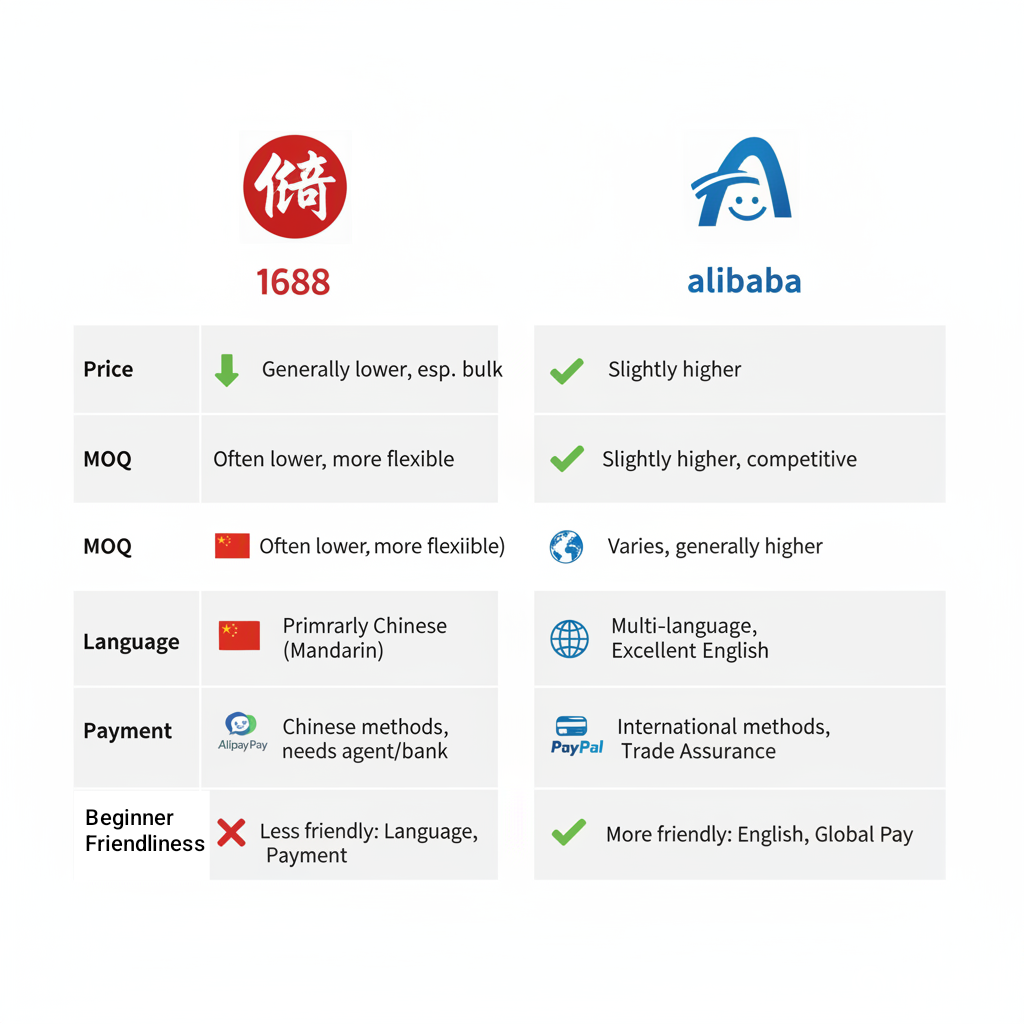
Many Zambian importers want to buy directly from China but get stuck choosing between 1688 and Alibaba. Both platforms offer access to factories and wholesalers, but they serve very different types of buyers. One is cheaper but complex, the other is simpler but more expensive. This guide breaks down the real differences between 1688 and Alibaba so beginners can choose the right platform based on budget, experience and risk tolerance.
Step 1: What 1688 Is and How It Works
1688 is a Chinese wholesale platform designed mainly for local buyers inside China. Prices are often much lower than Alibaba because suppliers sell directly to domestic resellers. Most listings are in Chinese, and suppliers expect buyers to understand local business practices.
For Zambian importers, 1688 is attractive because:
- Unit prices are significantly cheaper
- Suppliers allow bulk buying
- Product variety is massive
However, communication is harder, and payments usually require Alipay or WeChat Pay, which many Zambians cannot use directly.
Step 2: What Alibaba Is and How It Works
Alibaba is an international B2B marketplace built for global buyers. Suppliers list products in English and are used to working with overseas customers. Prices are higher, but the buying process is smoother and safer for beginners.
Alibaba works well because:
- English communication is standard
- Trade Assurance protects buyers
- Payments can be made via cards or bank transfer
For first-time importers, Alibaba reduces risk even if profits are slightly lower.
Step 3: Price Comparison (Realistic Example)
A fast-charging phone charger may cost:
- K8–K10 per unit on 1688
- K12–K15 per unit on Alibaba
The lower price on 1688 comes with extra steps such as translation, agent fees, and local Chinese payments. Beginners should compare total landed cost, not just unit price.
Step 4: Minimum Order Quantities (MOQs)
1688 suppliers usually require higher MOQs but allow mixing products. Alibaba suppliers often allow smaller orders but charge more per unit. For testing products, Alibaba is safer. For scaling up, 1688 becomes more cost-effective.
Step 5: Shipping to Zambia
Products from both platforms still require freight forwarding to Zambia. Beginners should:
- Use air freight for samples
- Use sea freight only after testing demand
- Always request full shipping quotes before paying
Step 6: Supplier Verification
Check:
- Years active on platform
- Customer reviews
- Product photos and videos
- Sample orders