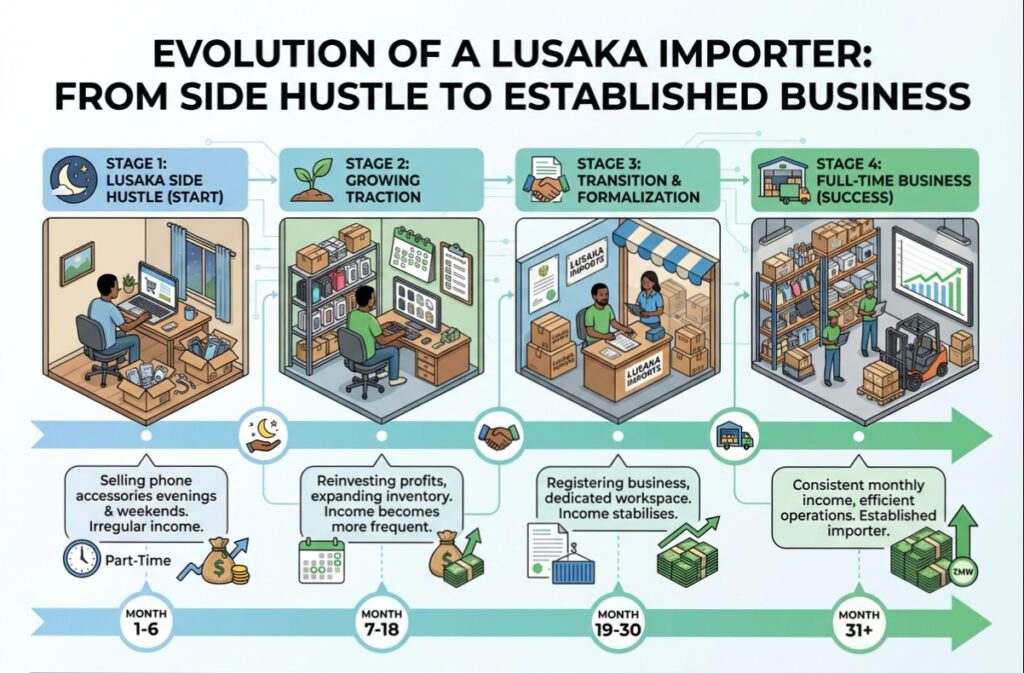
Many Zambians start importing as a side hustle, selling in their spare time while working a full-time job or running another business. The challenge is not starting — it’s achieving consistency. This case study shows how a Lusaka-based importer moved from irregular side-hustle sales to stable, predictable monthly income through discipline, reinvestment and simple systems.
Step 1: The Side Hustle Phase
The importer began by selling phone accessories after work and on weekends. Sales depended heavily on free time and income was inconsistent.
Key characteristics of this phase:
- Limited selling hours
- Small, irregular orders
- No formal tracking of profits
- Sales driven mainly by WhatsApp and referrals
At this stage, importing was treated as extra income, not a business.
Step 2: Identifying a Consistent Product
After experimenting with different accessories, one pattern became clear: basic phone accessories sold repeatedly, regardless of trends.
Products that performed best:
- Phone chargers
- Charging cables
- Earphones
These items had:
- Daily demand
- Low customer complaints
- Predictable pricing
Focusing on a narrow product range reduced complexity and improved cash flow.
Step 3: Fixing Inconsistency
The biggest challenge was inconsistency — sometimes products sold out quickly, other times stock ran out too late.
Changes made:
- Reordering before stock finished
- Keeping simple records of costs and sales
- Using the same supplier consistently
These small adjustments created more predictable sales cycles.
Step 4: Reinvestment as a Turning Point
Instead of spending early profits, the importer began reinvesting every sales cycle.
Reinvestment strategy:
- Profits rolled into the next order
- Gradual increase in order size
- No lifestyle spending from business income
This is where growth accelerated. Stock availability improved, and customers began to rely on consistent supply.
Step 5: Achieving Stable Monthly Sales
After several cycles, sales became predictable enough to estimate monthly income.
Indicators of stability:
- Stock turnover every month
- Repeat customers
- Fewer emergency restocks
- Clear understanding of margins
At this point, importing shifted from “side hustle” to “reliable income stream.”
Step 6: Transitioning to Full-Time
The decision to go full-time was not rushed. It happened only after:
- Monthly profit covered basic living costs
- Sales were consistent for multiple months
- Supplier and logistics processes were reliable
This reduced risk and prevented burnout.
Step 7: Challenges Along the Way
Even after consistency, challenges remained:
- Occasional supplier delays
- Price competition
- Managing cash flow during slow weeks
However, systems and experience made these challenges manageable.
Step 8: Key Lessons for Beginners
This case study highlights several important lessons:
- Consistency matters more than speed
- Simple products scale better
- Reinvestment builds momentum
- Systems reduce stress
Success came from discipline, not luck.