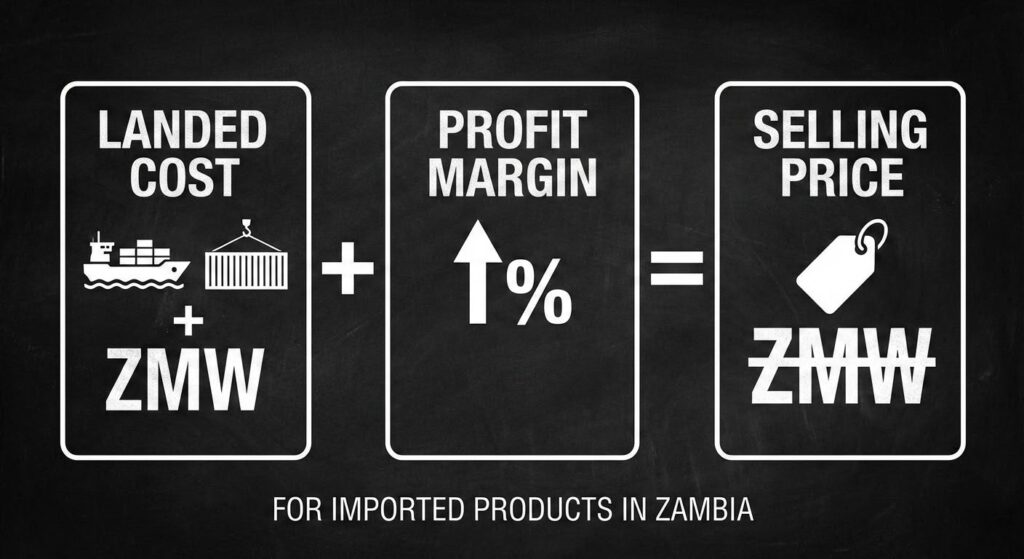
How to Price Imported Products for Profit in Zambia
Expanded Detail
Step 1: True Cost Awareness
Many beginners price using supplier cost only, ignoring:
- Clearing agent fees
- Exchange rate fluctuations
- Storage and transport costs
These hidden costs quietly kill profit.
Step 2: Market Reality Check
Pricing must match customer perception, not importer expectations.
Ask:
- What are customers already paying?
- Are competitors offering warranties?
- Is this a convenience product or comparison product?
Your price should fit the buying context.
Step 3: Margin vs Sustainability
Higher margins are tempting, but:
- Slow-moving stock locks capital
- Smaller margins + faster turnover often outperform
Beginners benefit more from cash flow than big margins.
Step 4: Volume-Based Strategy
Fast-moving accessories work best when:
- Priced competitively
- Easily replaceable
- Reordered frequently
This keeps money circulating.
Step 5: Continuous Pricing Review
Re-evaluate pricing when:
- Supplier costs change
- Demand increases
- Competition enters the market
Pricing is a living decision, not a one-time task.