Many beginners import products successfully but fail to make real profit because of poor pricing decisions. Some underprice to sell quickly, while others overprice without understanding the market. Pricing is not about guessing or copying competitors. It is about understanding your total cost, positioning, and customer expectations. This guide explains how to price imported products in Zambia for sustainable profit.
Step 1: Understand Why Beginners Underprice
Underpricing is usually driven by fear, not strategy.
Common reasons include:
- Fear of slow sales
- Pressure to recover money quickly
- Copying cheaper competitors blindly
- Not knowing total landed cost
Underpricing often leads to stress and business failure.
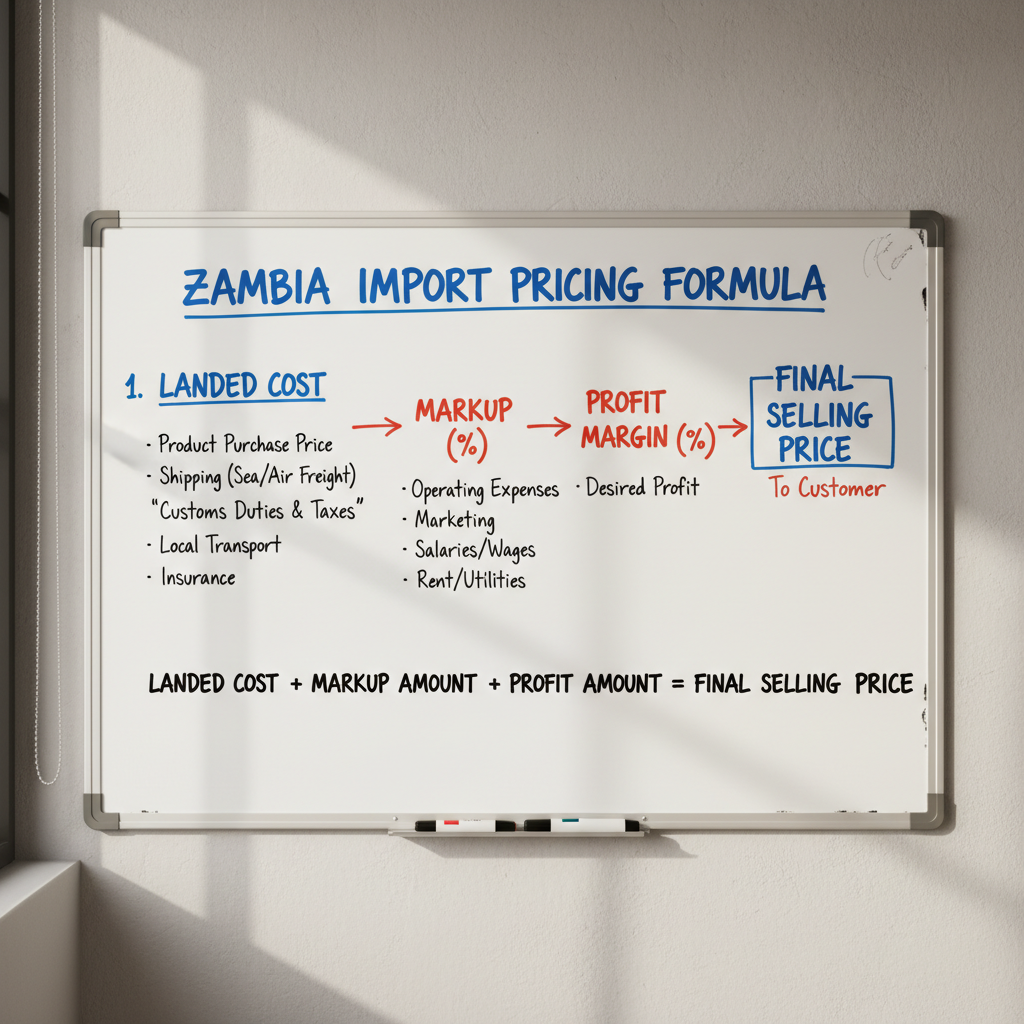
Step 2: Calculate Your Total Landed Cost
You cannot price profitably without knowing your true cost.
Include:
- Product purchase price
- Shipping costs
- Clearing and customs fees
- Local transport
- Packaging or handling costs
Every kwacha matters when margins are small.
Step 3: Understand Markup vs Profit
Markup is not profit.
- Markup is the increase added to cost
- Profit is what remains after all expenses
Many sellers think they are profitable when they are not.
Step 4: Study Your Market Before Pricing
Pricing must reflect customer expectations.
Research:
- Competitor prices
- Product quality differences
- Buyer purchasing power
- Delivery and warranty offerings
Price should match perceived value.
Step 5: Choose the Right Pricing Position
Not all products should compete on price.
Options include:
- Budget pricing
- Mid-range pricing
- Value-based pricing
Competing only on price is risky.
Step 6: Price for Flexibility, Not Perfection
Your first price does not have to be final.
Good pricing allows:
- Discounts when needed
- Bundle offers
- Promotions without losses
Rigid pricing limits growth.
Step 7: Factor in Sales Speed vs Margin
Fast sales with no margin is not success.
Ask:
- How fast do I need to sell?
- How much margin is acceptable?
- Can I afford slower sales?
Balance speed and sustainability.
Common Pricing Mistakes to Avoid
- Ignoring exchange rate changes
- Matching the cheapest seller
- Forgetting hidden costs
- Discounting too early
Struggling with pricing? Use the product pricing calculator to set prices that actually make profit.